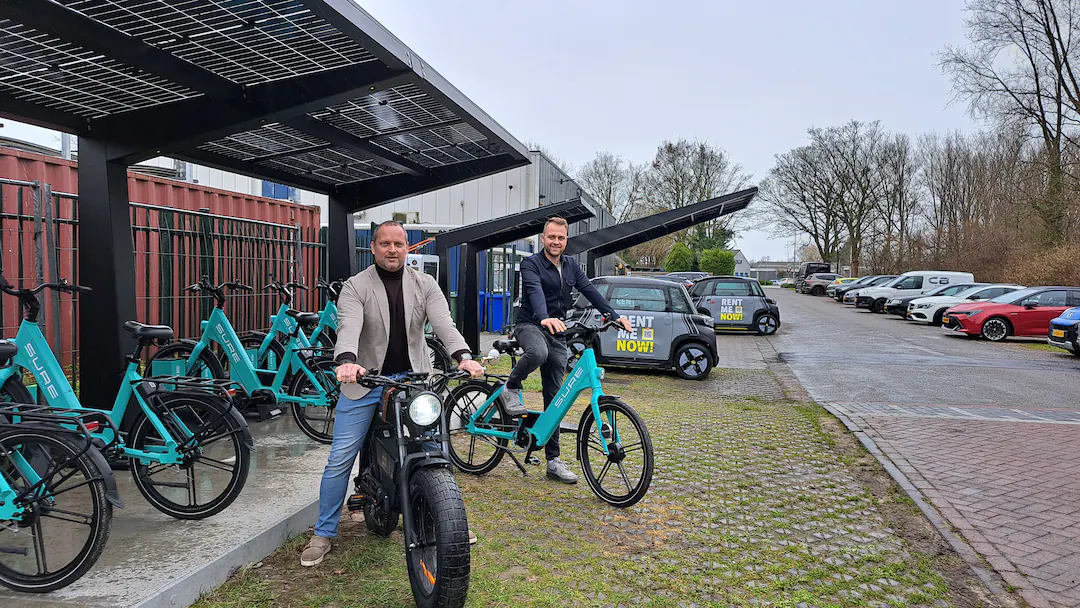
Patrick de Wit and Glenn Jonkman can already picture it clearly. Hop on a shared electric bike at a hub to reach your destination! And if it rains? Then you simply take a mini car that runs entirely on solar energy. If the two entrepreneurs have their way, it will soon be the most normal thing in Zeeland. And far beyond.
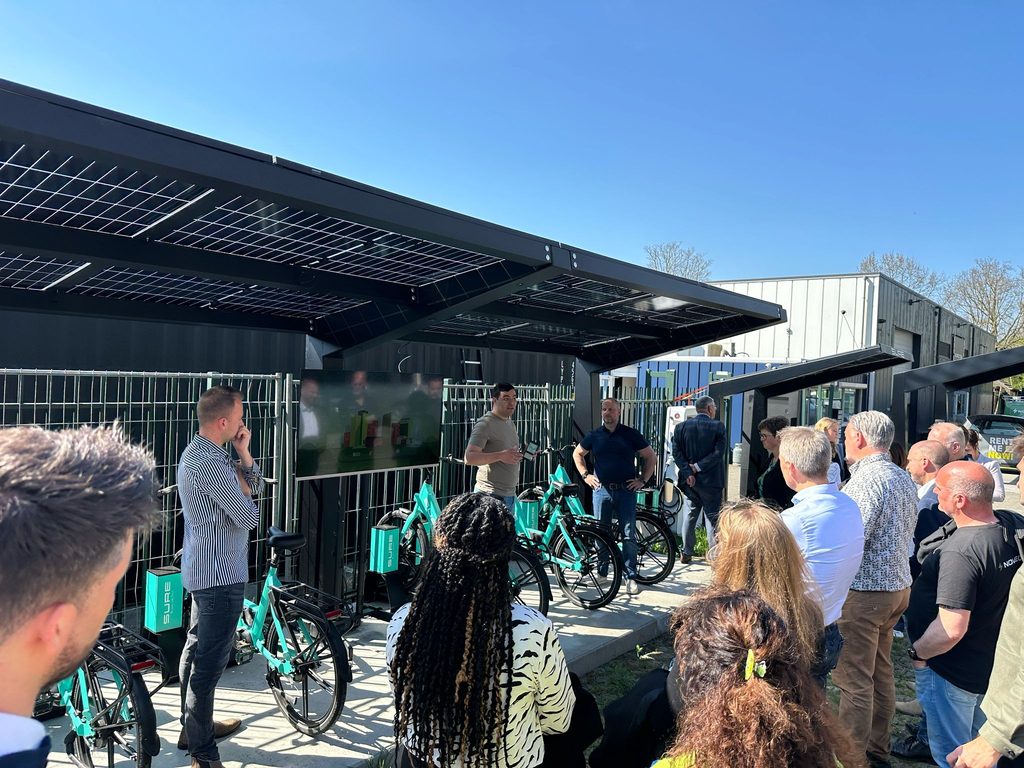
To really understand what De Wit and Jonkman have in mind, it is best to visit electrical installation company Novectra on Oudelandseweg in Terneuzen. Outside the door stands a mobility hub, like the two entrepreneurs would like to see in many more places. Under solar panel canopies, small electric cars, bikes and scooters are lined up. The biggest ‘problem’ for now is that it is the only hub in Terneuzen; you cannot yet leave your rented vehicle at another ‘charging island’.
That is going to change quickly, if Jonkman and De Wit have their way. Jonkman works on innovative electrical engineering at Novectra. “We have a major problem with grid congestion in the Netherlands, we are spoiling nature with meadows full of solar panels and we have a lot of asphalt,” Jonkman explains.
You can also combine those three things into a solution for many issues, he thought. Why not put solar panel canopies on that asphalt? Place shared electric bikes, scooters, cars and e-choppers underneath, add a storage battery for days when the sun shines a little less, and you’re done. Is it that simple? No, of course not. But that’s essentially what it comes down to. Jonkman: “Take the car park at the ski hall in Terneuzen, for example. Or the parking area at sports centre Vliegende Vaart. Those are very interesting places to implement our plan. The asphalt is already there, you just need to add a solar panel roof.”
Young people moving away
Jonkman came into contact with Patrick de Wit of SURE Mobility through a mutual contact at social employment organisation Dethon. Dethon has been maintaining bikes for De Wit’s company for some time. After a successful career in hospitality on Mallorca, he now focuses on sustainable mobility solutions for both the business and private markets. De Wit operates from Harderwijk, but his roots are in Tholen. “Because of my background, I have always felt an affinity with Zeeland. Issues such as loneliness among the elderly and young people moving away play a role here, partly because public transport services are inadequate. We can play a part in that.”
“Het kan ook een oplossing zijn voor drukkere, toeristische gebieden. Je parkeert je auto aan de rand van de stad en gaat verder met de fiets”
Patrick de Wit
De Wit and Jonkman are initially focusing their Multi Mobility Charging Island (*MMCI) on Zeeland. They see their smart energy hubs as the way to boost public transport in the province, including in areas where it is no longer taken for granted that a bus line stops. Jonkman: “Imagine you live in Ossenisse. Then you might soon ride an electric bike from a mini-hub to Kloosterzande, for example, and catch the bus there.”
A condition for success is that the hubs are within a maximum of five minutes’ walk. A hub in every village would be fantastic, De Wit and Jonkman say in unison. “But it can also be a solution for busier, tourist areas. You park your car on the edge of the city and continue by bike,” De Wit adds.
The two entrepreneurs are now taking their idea on the road. They are visiting municipal and provincial offices, among other places. Subsidy funds and commercial advertising on vehicle displays should eventually make it possible to rent a bike or small car for next to nothing. Anyone who wants to try it now pays 49 euros for a car for 2.5 hours. A bike costs thirty euros per day.